Fellowship Scheme
Fellowship Scheme
The Academy of Education Excellence (AEE) fellowship scheme is to foster teaching excellence at HKUST. Faculty members with evidence of an excellent teaching track record can apply to become a Junior Fellow, Fellow, or Senior Fellow of the AEE.
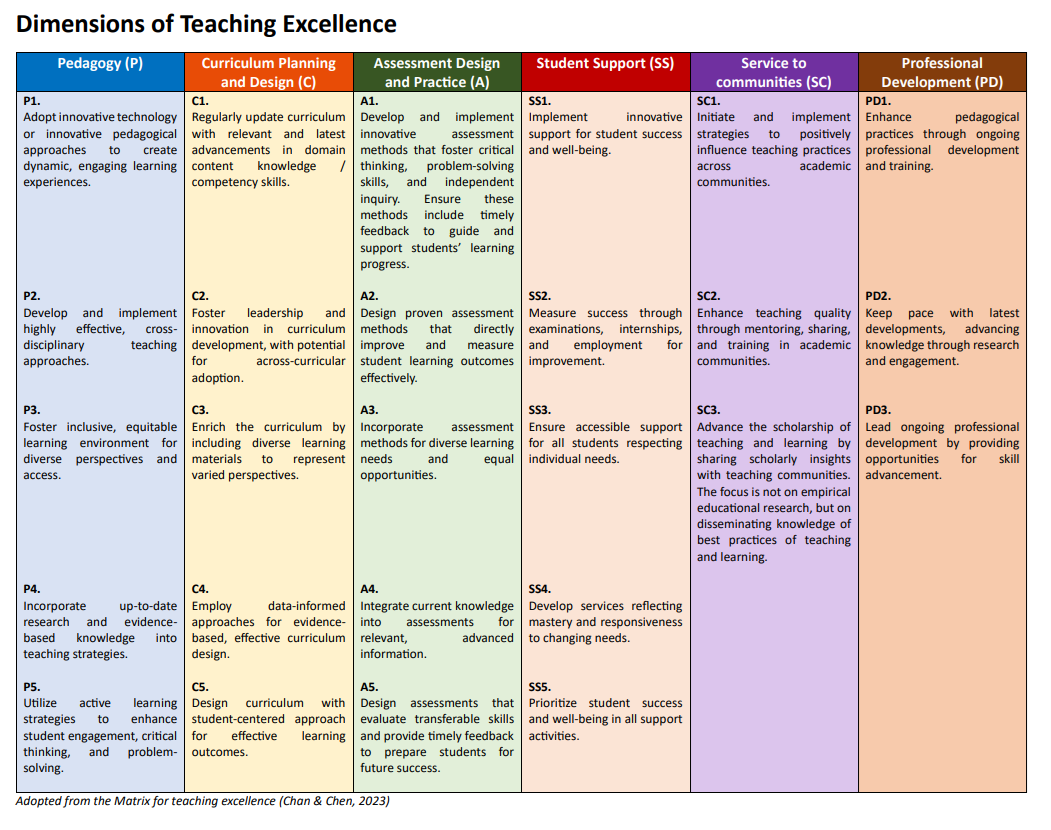
Awarded based on evidence provided by faculty members, which will be evaluated on six dimensions of Teaching Excellence by AEE Committee.
What level of recognition is right for me?
Key Assessment Criteria
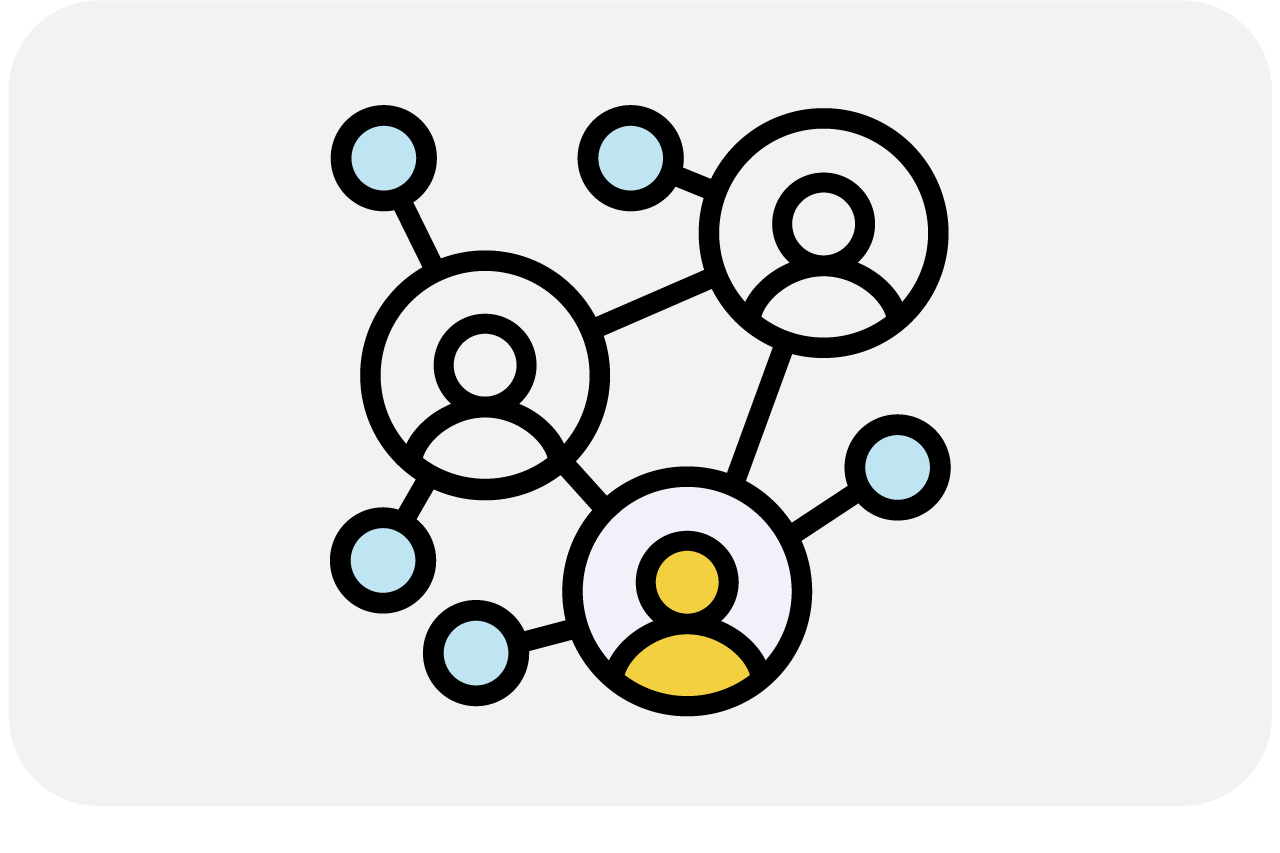
- Reflects the initial stage of demonstrating potential in teaching excellence.
- Required to demonstrate evidence in 2 dimensions for most aspects, except for Service to Communities, which requires evidence in 1 dimension.

Key Assessment Criteria
- Represents a deeper engagement and higher proficiency in teaching and assessment practices.
- Required to demonstrate evidence in 4 dimensions for Pedagogy and Assessment Design and Practice, indicating a higher level of expertise and contribution in these areas.
- Required to demonstrate evidence in 3 dimensions for Curriculum Planning and Design, Student Support, and Professional Development.
- Required to demonstrate evidence in 2 dimensions for Service to Communities.

Key Assessment Criteria
- Reflects a comprehensive mastery in all areas of teaching excellence.
- Required to demonstrate evidence across all 5 dimensions for most aspects, except for Service to Communities and Professional Development, which requires evidence in 3 dimensions.
How does the scheme work?
To be effective and have an impact, the AEE should be integrated into HKUST’s wider systems as much as possible, such as Departmental KPIs, Merit Salary Review (MSR) and other performance reviews, Faculty Online Reporting System (FORS), professional development through CEI, and teaching awards.

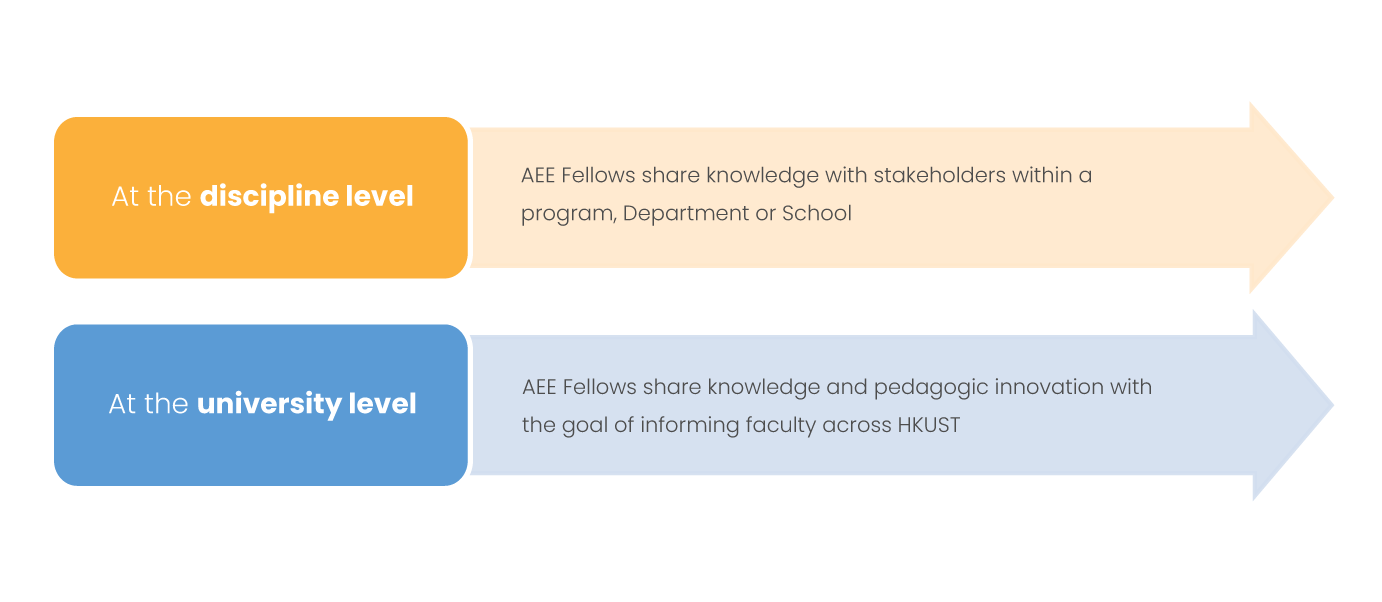
The key goal of the AEE is to holistically improve teaching and learning at HKUST. Hence, knowledge transfer and workflow need to formally occur across different university levels with mechanisms that encourage and recognize scholarly activities and innovative teaching. This can be done in several ways:
In addition, earning micro-credentials will be a key component for faculty members to become an AEE Fellow. By completing courses offered by CEI, faculty members can earn micro-credentials in the form of online badges.
Frequently Asked Questions
A: Currently one per year, but it may increase to two as AEE grows.
A: Becoming an AEE Fellow offers several key benefits:
- Reflect on and enhance your teaching practice
- Receive recognition for your contributions to teaching and learning
- Opt for a specific pathway to develop your teaching
- Document your development as a higher education educator
- Display your commitment to professional teaching in higher education
A: Fellowship titles will be good for three years. Afterwards, Fellows will be asked to submit evidence of continued teaching excellence to maintain title.
A: You might include in your application the examples of:
- Curriculum Design
- Program/Course Development
- Identifying learner needs
- Coaching
- Online learning resources
- Study Materials Preparation
- Building virtual learning environment