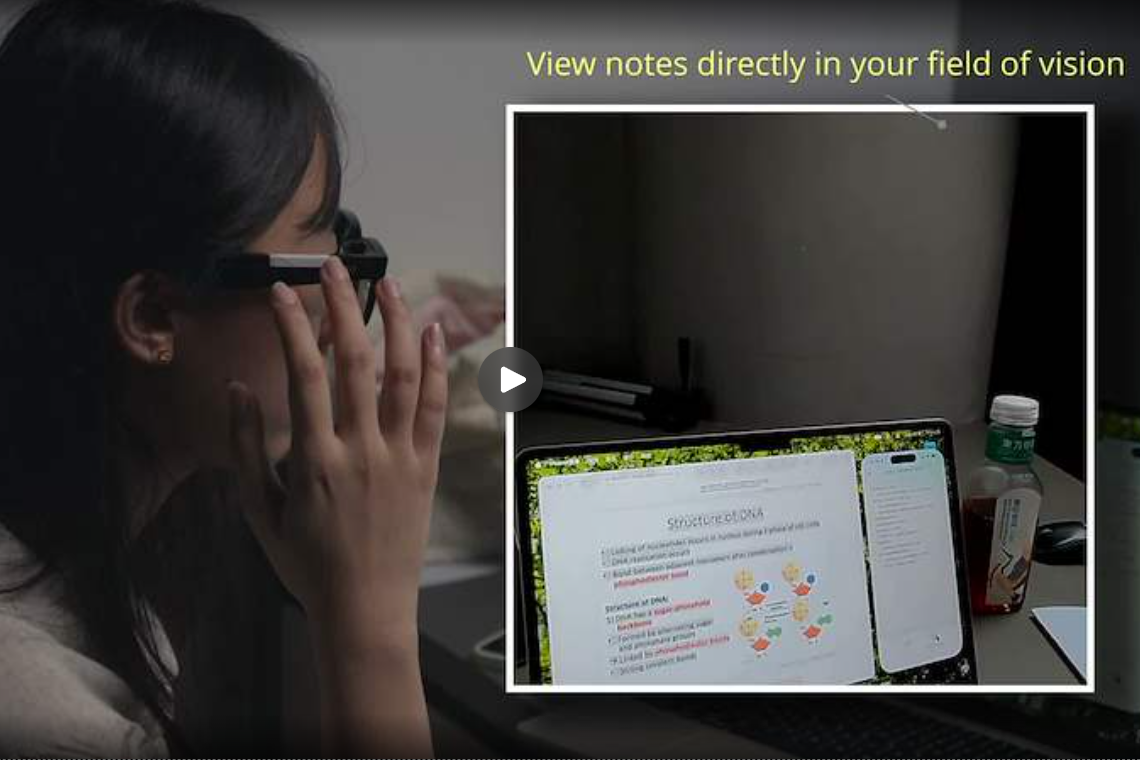
As wearable AI technology advances, AI-enabled smart glasses pose a subtle yet significant threat to academic integrity. Resembling ordinary prescription eyewear, these devices allow users to secretly capture exam papers and receive real-time, in-lens AI answers without alerting traditional invigilators.
Watch a 3-minute overview of how AI smart glasses can be used to cheat in proctored exams
- Advanced Learning Fund (ALF)
- Fund for Innovative Technology-in-Education – Institutional (FITE)
- Fund for Innovative Technology-in-Education – Inter-Institutional Collaborative Activities (FITE-IICA)
- Large Teaching & Learning Innovation Projects (L-TLIP) Large Teaching & Learning Innovation Projects (L-TLIP)
- Advanced Learning Hub
- Blended Learning & MOOC Blended Learning & MOOC
- Institutional Learning Technologies
- Teaching and Learning Innovation Projects Teaching and Learning Innovation Projects
- Active Learning Tools and Proposed Usage
- Education and Generative AI Fund Education and Generative AI Fund
- UGC's Strategic Grants
- The Academy of Education Excellence (AEE) The Academy of Education Excellence (AEE)
- HKUST eLearning Strategy
- eLearning Workshops
- New Faculty Program New Faculty Program
- Our Strategic Alliances
- Generative AI & Education Generative AI & Education
- Augmented and Virtual Reality
- Blended Learning Blended Learning
- Graduate Teaching Assistant Program Graduate Teaching Assistant Program
- Experiential Learning
- Teaching and Learning Symposium
- Gamification & Game-based Learning
- Seminars & Workshops
- MOOC MOOC
- Learner-centered Course Design Learner-centered Course Design
- Online Teaching - Real-time Online
- Online Teaching - Mixed Mode Teaching
- People
- News
- Contact Us
To evaluate the risks posed by AI smart glasses, we conducted a two-phase study in Summer 2026:
Phase 1 — Device Benchmarking
We carried out technical evaluation and comparative benchmarking of two consumer AI glasses to assess:
- hardware capabilities
- connection stability
- real-time AI performance during use
Phase 2 — Detection Testing
We then conducted empirical testing of six detection methods to determine how effective they are against the primary device model identified in Phase 1.
At present, mitigating this threat requires a primarily human-centric approach. The most reliable defense includes:
- strict enforcement of device bans during high-stakes assessments, such as exams
- targeted behavioral patrols
- active physical frame inspections
Check out the full report of our study:
Threat Assessment and Detection Protocols for AI Smart Glasses (August 2026) (Require HKUST login)